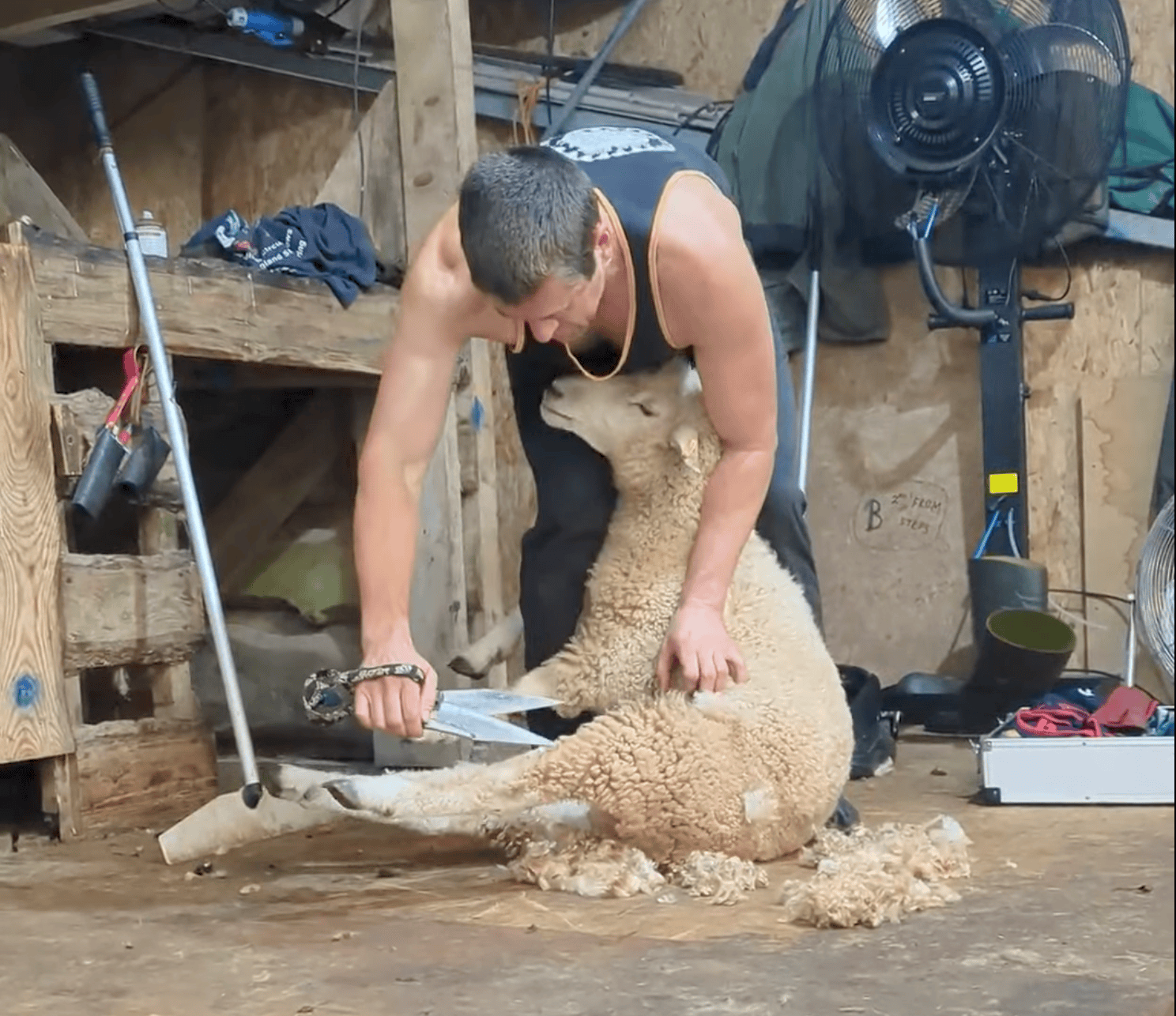
This autumn I attended a course to learn how to shear sheep using hand blades. It was a revelation.
These days nearly all shearing is done using electric machines. Seasoned shearers can clip a sheep in about a minute, meaning they can shear several hundred in a single day. Which, of course, isn't to question it's undoubted skill and hard work. With large flocks of sheep this makes machine shearing much more efficient, especially when the farm is relying on a contractor to come in to do the job. By contrast, even the best hand shearers take around 3 minutes per animal, so you simply can't get through nearly as many sheep per day.
But in a situation like ours with only a 50 or so sheep to shear, slower can actually be an advantage as it gives the shearer time to thoroughly examine each sheep and the wool handler time to properly grade and sort the fleece. It's also a lot quieter. Machine shearing is noisy and hectic and the rate of shearing makes the whole process quite intense for all involved. Hand shearing not only slows things down, it massively reduces the volume, making the whole experience much calmer and more pleasant for everyone.
While machine shearing cuts the fleece very close the animal's skin, blade shearing can leave a little wool on. And without the heat of the mechanical blades, after hand shearing all the lanolin is left in the remaining wool. This means the sheep don't have to divert nearly as many resources into producing more fleece, lanolin and suddenly adjusting to life without any fleece at all. The hand blades also cut the fibres a way that water wicks away from them effectively. Not only dose this soften the shock of shearing on the sheep, it also opens up the possibility of clipping at less clement times of the year - either earlier in the spring or in autumn before winter arrives. Shearing pregnant ewes before lambing makes them more comfortable during the birth by removing an often heavy, wet and dirty coat, creating a cleaner environment for the lambs to first encounter and means that when the ewe shifts her priorities to producing milk, which often results in a 'break' in the fibre, this doesn't affect the wool crop. Shearing in the autumn allows us to take a crop of premium quality lamb's wool in time for them to regrow enough fleece to protect then through the winter months.
Finally, now that I know how to hand shear, I feel I have full control over when and how to clip the sheep, which is both reassuring and actually quite empowering.